A lot of people think a leaking water heater can be repaired — and sometimes they're right. If it's leaking from a fitting, a supply line, or the T&P valve, those are fixable. But when the leak is coming from the base of the tank itself, that's the tank failing from the inside out. You can't patch that. Replacement is always the right call, and the sooner the better before it causes real damage to the floor or surrounding area.
The Situation
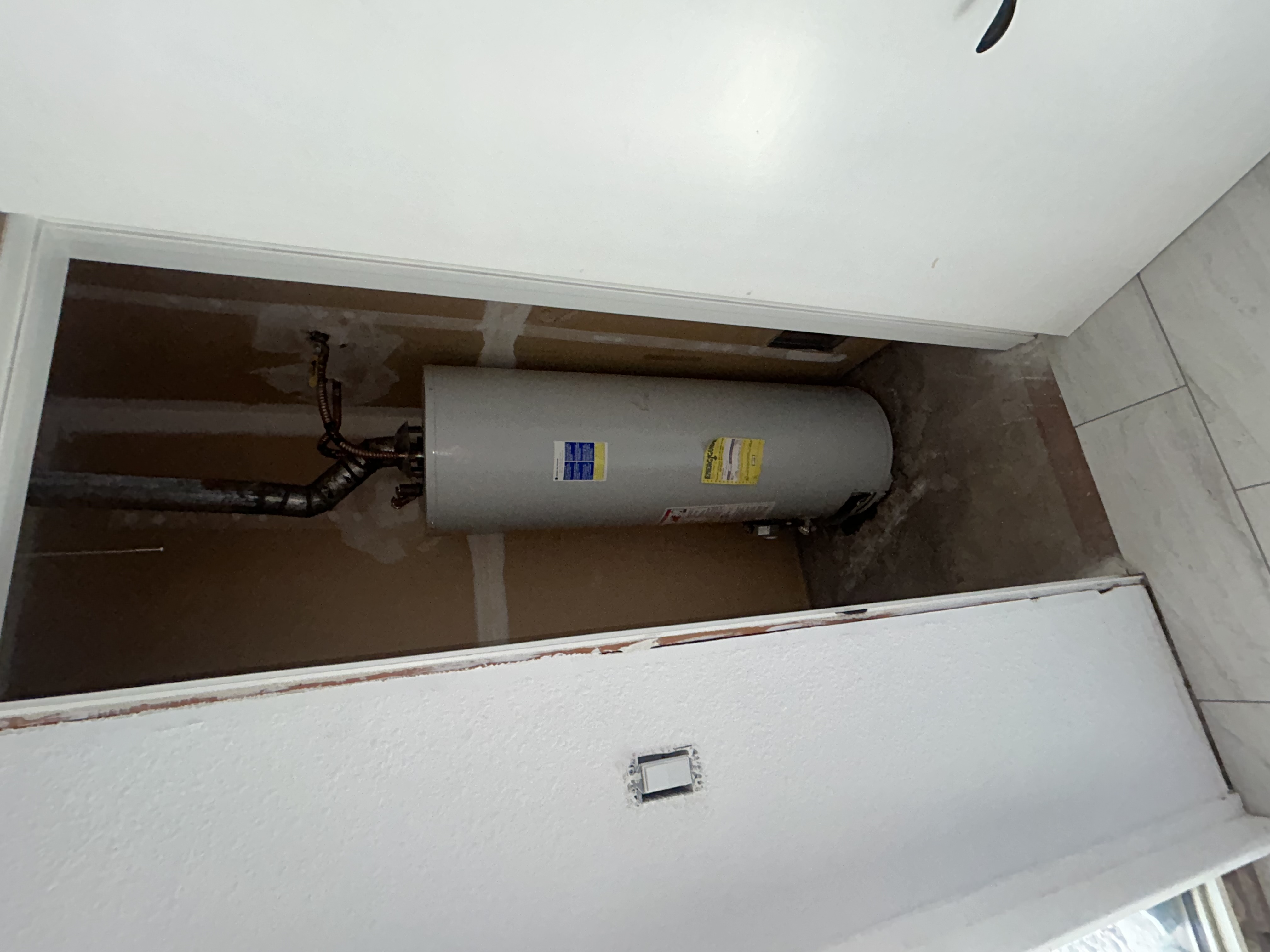
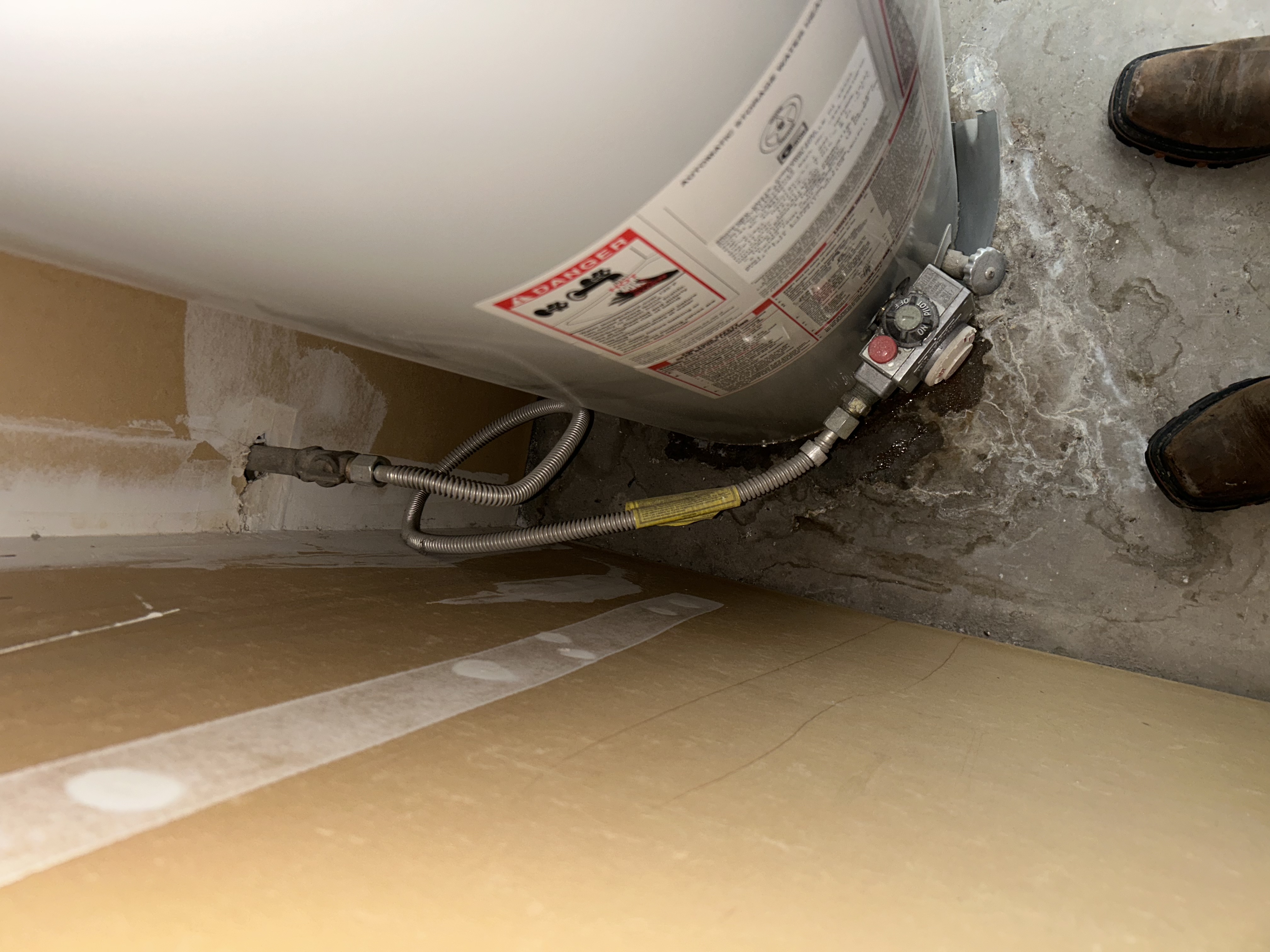
The homeowner called because their water heater was leaking from the bottom. The unit was tucked into a small cabinet that was originally an exterior closet — back when the front patio was open air. At some point the patio had been enclosed and converted into interior living space, and the water heater just stayed where it was.
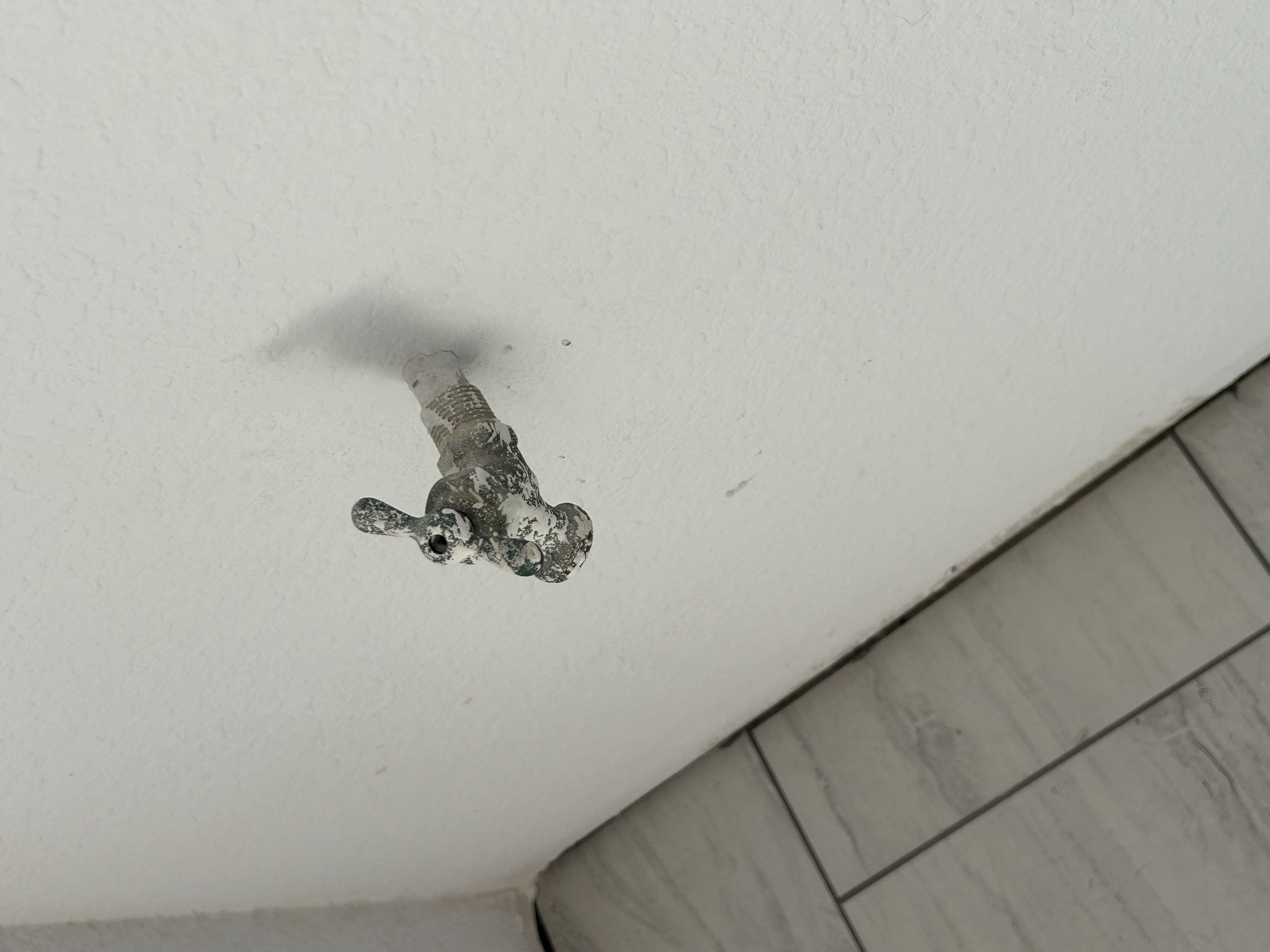
That created a couple of interesting problems beyond just the leak itself. The space had low clearance overhead, which meant sizing the replacement carefully. The existing T&P (temperature and pressure) relief drain line was also routed too high — a code issue that needed to be corrected. And sticking out of the wall inside the cabinet was an old hose bib, left over from when that wall used to face the patio outside. It had no business being there anymore.
- Bradford White 40-gallon gas water heater
- Manufactured: October 2000
- Warranty expired: January 2007 — nearly 20 years ago
- Failure: Leaking from the bottom of the tank
- Location: Enclosed former patio, tight clearance overhead
What We Found
The tank had completely rusted through at the base. This is how most tank water heaters eventually go — sediment builds up on the bottom over the years, accelerating corrosion from the inside out until it finally breaches. By the time water is pooling on the floor, the tank is done.
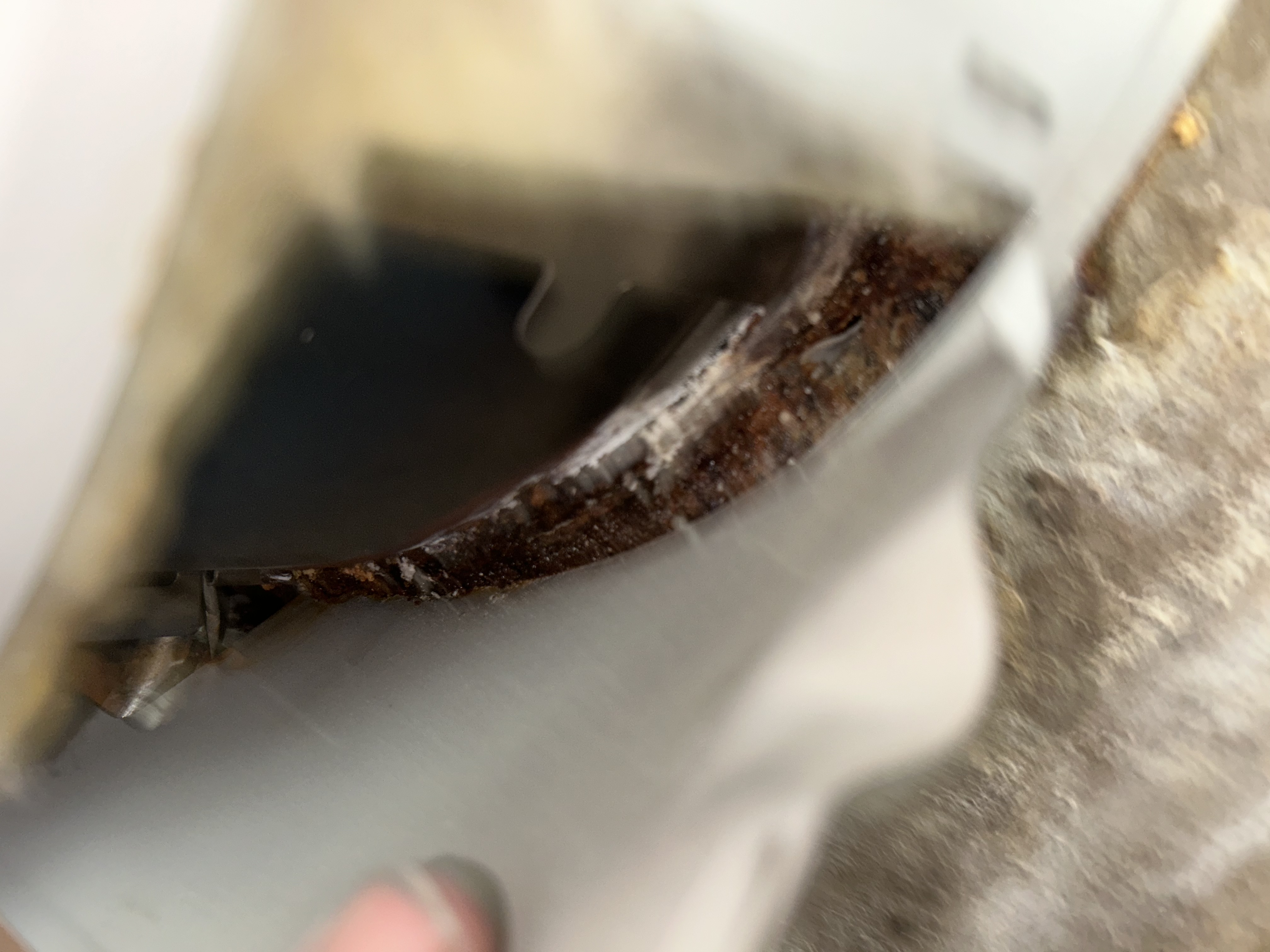
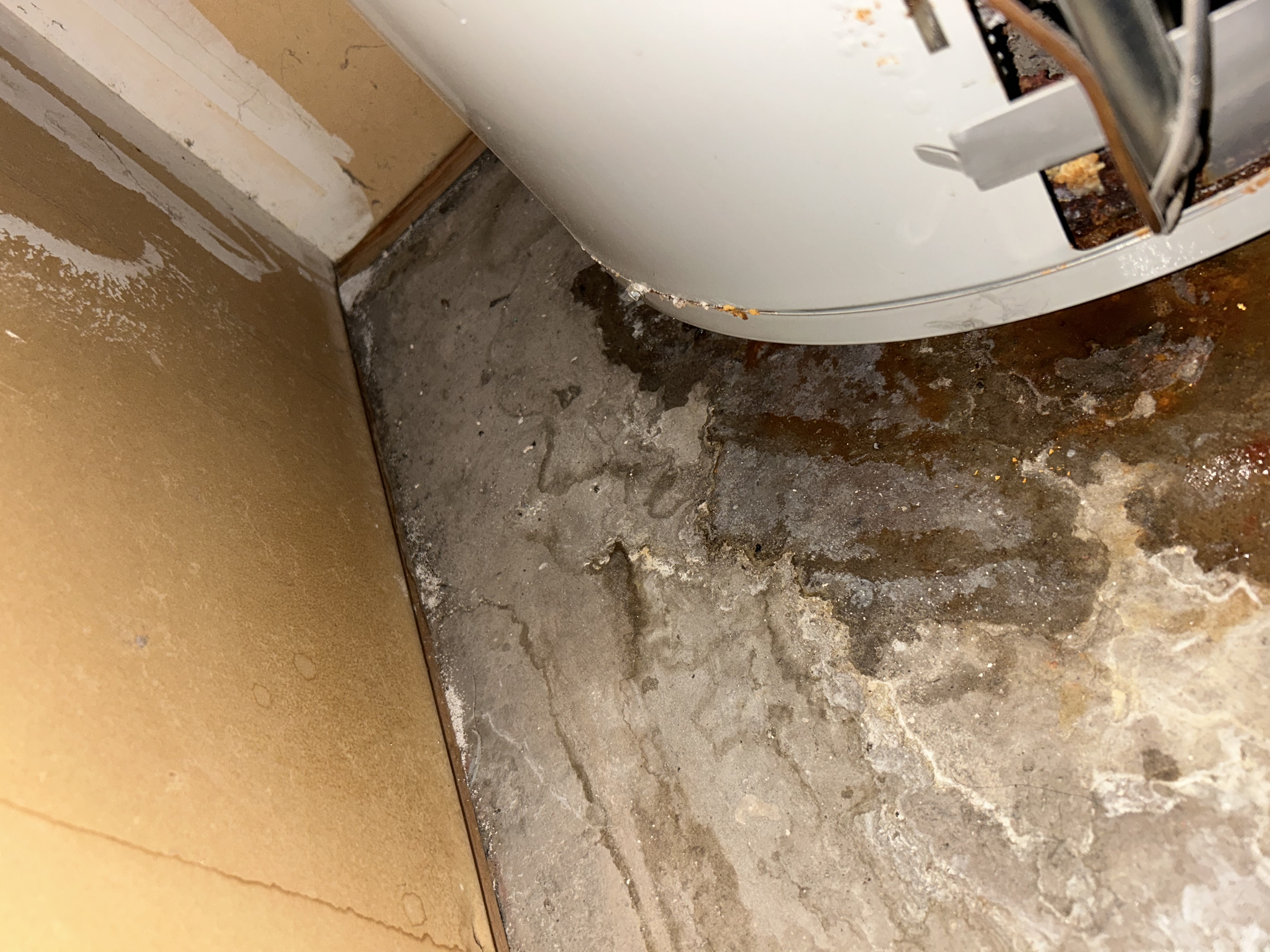
A quick serial number lookup confirmed what Paul suspected — this Bradford White was manufactured in October 2000. Twenty-five years old, warranty expired nearly two decades ago. It had an honest run, but there was nothing left to save here. That age and failure mode went straight into the 2-10 documentation.
Paul also documented the T&P (temperature and pressure) drain line — it was routed higher than the relief valve outlet, meaning if it ever opened, water wouldn't drain away properly. Not an immediate danger, but a code issue that needs to be corrected as part of any compliant replacement. And sticking out of the interior wall was an old hose bib left over from when that space was an open patio — that gets capped as part of the scope too.
What the Replacement Requires
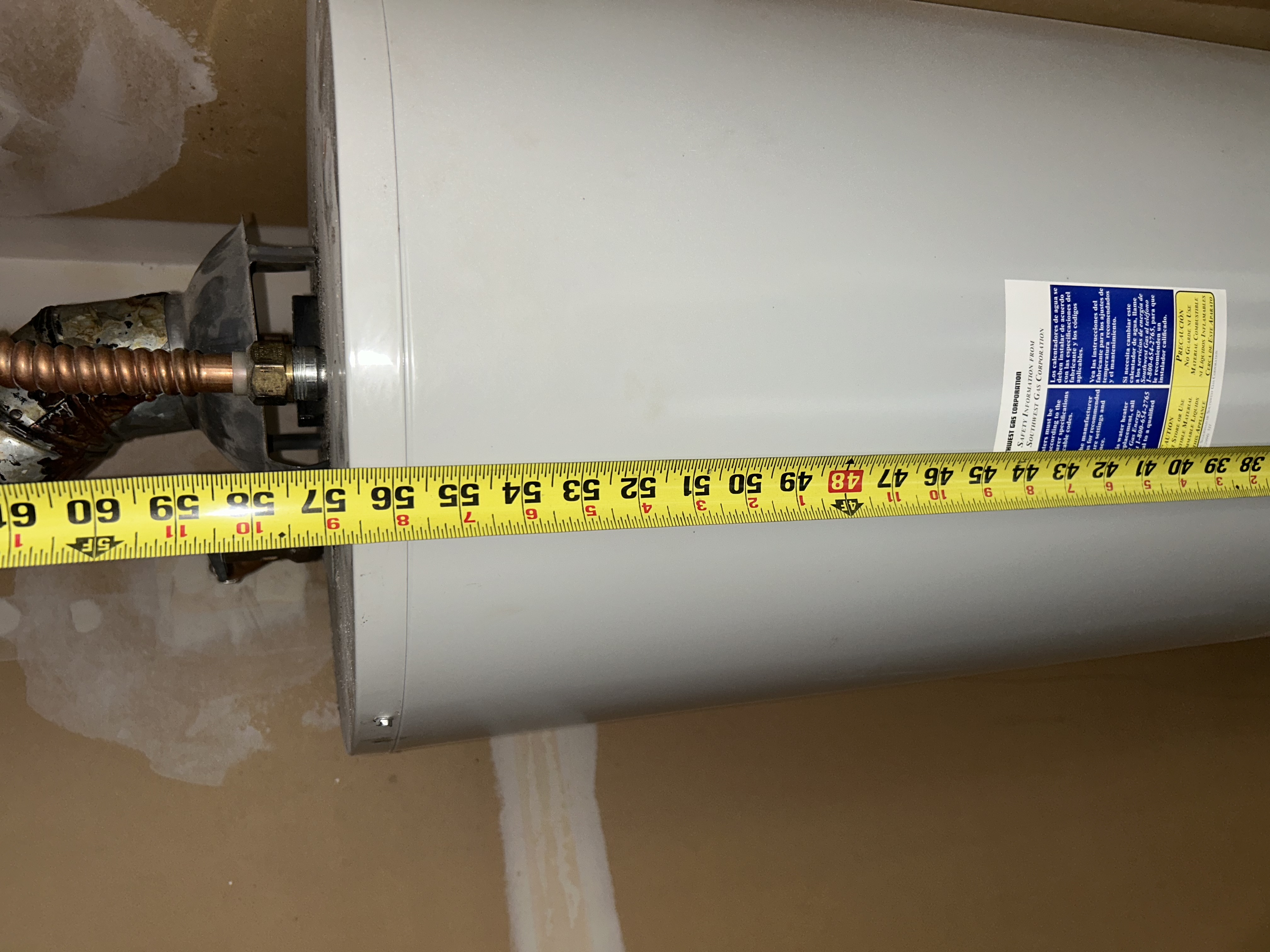
Because of the low overhead clearance in the cabinet, the new unit needs a top T&P configuration — meaning the temperature and pressure relief valve exits from the top of the tank rather than the side. That narrows the options down, but it's a standard enough request that we know exactly what to spec.
Paul submitted the full scope to 2-10 for authorization. We don't start the work until that's approved — that's how the process is supposed to go, and we make sure our documentation gives them everything they need to say yes without a back-and-forth.
- New 40-gallon gas water heater — top T&P configuration for this space
- New drain pan and drain line, properly sloped
- New T&P relief valve
- New gas line and sediment trap
- New ball valve shut-off
- New copper supply lines
- Flue modified as needed to fit the new unit
- Cap and remove the old interior hose bib
- Correct T&P drain line routing to meet current code
Working With Home Warranty — and Without
Home warranty work moves faster when the claim is airtight the first time. That means photos of the failed unit, measurements of the space, a written scope that explains every line item, and notes on anything unusual — like a T&P drain that's been out of code for who knows how long, or a hose bib that has no business being inside a house. We've done enough 2-10 jobs to know what they need to see, and we put it all in up front.
That said — home warranty companies don't always approve the full scope we recommend. Sometimes they'll cover the unit but not all the associated work. When that happens we're straightforward with the homeowner about what the warranty is covering and what it isn't, and we give them a fair out-of-pocket number for the rest. We're not going to pad it because a warranty company is involved, and we're not going to cut corners on the parts they're not covering. You shouldn't need to call three other plumbers to make sure you're getting a fair price — that's on us to make easy.
If someone called us directly for a job like this — no home warranty, just a straight replacement with this same scope — they'd be looking at around $2,300. That covers the tank, all the associated components, and the code corrections. Every job is a little different depending on what's there, but that's a realistic number for a standard 40-gallon gas water heater replacement in the Phoenix area.
What We Actually Recommend: Tankless
Whenever we're replacing a tank water heater, we give homeowners the full picture — because there's a better option most people don't fully understand going in.
We install the Navien tankless water heater with a built-in recirculation pump, and it's what we recommend to almost everyone making this decision. Here's the honest version of why: the old Bradford White in this house lasted 25 years, which is genuinely impressive. But that was a different era of manufacturing. The tank water heaters being made today are lucky to last 6 to 8 years. Build quality has dropped, materials are thinner, and the market has raced to the bottom on cost. Put in a new tank unit today and you're probably doing it again before 2035.
The Navien is a different category of equipment entirely. It heats water on demand — no standing tank of water losing heat around the clock. The built-in recirc pump means hot water at the tap in seconds instead of running it until it warms up. And the lifespan is in a completely different league than anything you'd get in a tank unit today.
A full tankless conversion — Navien unit, all associated gas and water connections, venting — runs around $7,600 out of pocket. That's a bigger number upfront. But compare it to replacing a tank heater every 6 to 8 years at $2,300 a pop, and the math changes fast. Three tank replacements over 20 years costs more than one tankless installation that will likely outlast all of them — and you get better hot water the whole time.
Home warranty plans generally don't cover a tankless upgrade — that's always an out-of-pocket decision. We don't push it on anyone. We just think homeowners deserve to know what the options actually are before they default to replacing like-for-like.
Sun City Homes and Aging Water Heaters
Sun City has a lot of homes built in the 60s, 70s, and 80s with water heaters that have been replaced once or twice and are now on borrowed time again. If your unit is more than 10 years old and hasn't been looked at, it's worth a call. The failure mode is almost always the same: slow internal corrosion, mineral buildup, eventual leak from the bottom. The difference is whether you catch it before it soaks your floor — or after.
We serve all of Sun City, Sun City West, Surprise, Peoria, and the rest of northwest Maricopa County. Water heater calls are same-day in most cases.